
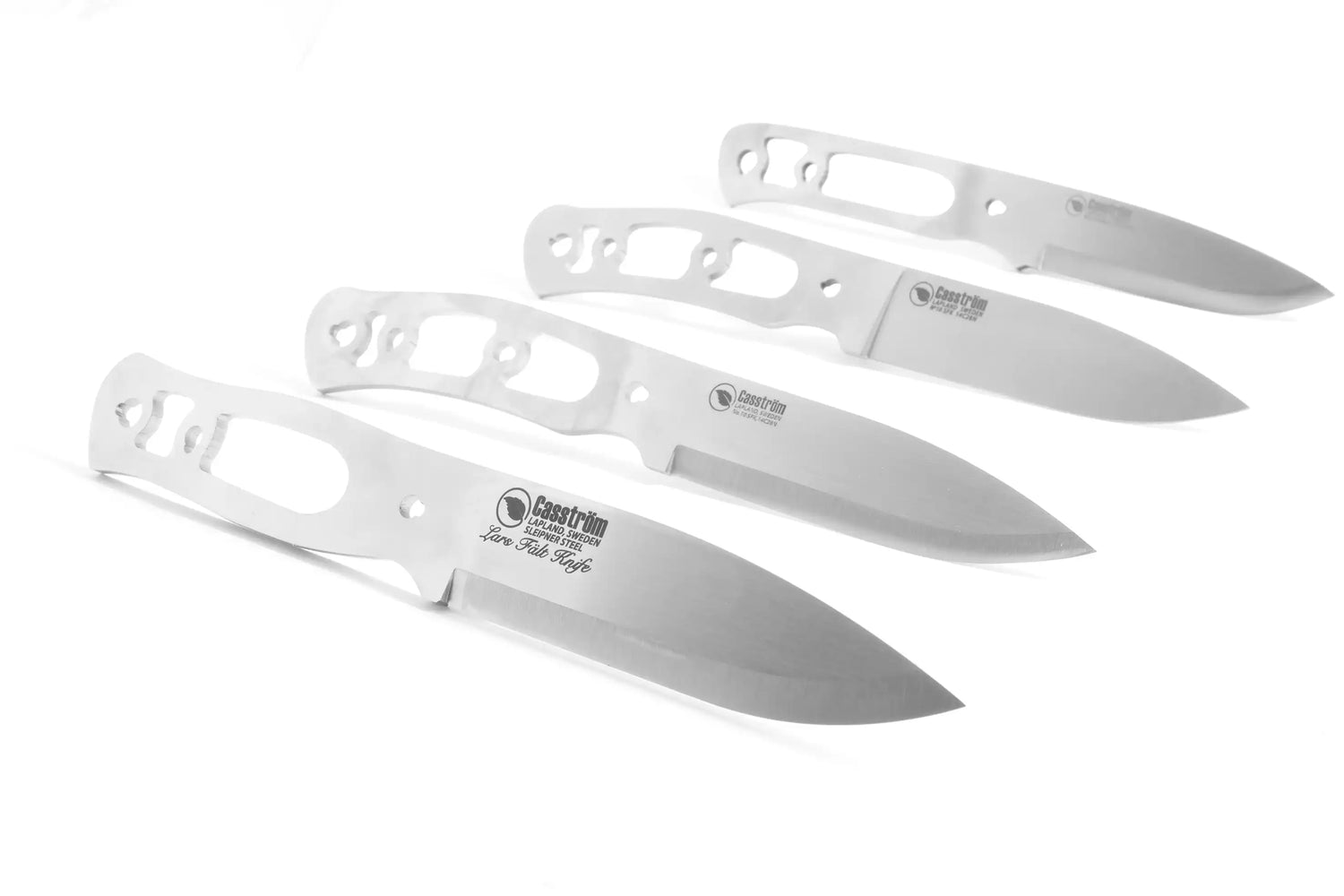
Going the Extra Mile
At Casström, we believe that the performance of a knife begins long before it leaves the factory. One of the most critical steps in creating a high-performance blade is heat treatment — a specialist process that determines how well your knife steel performs in the real world. We follow a rigorous heat treatment regimen designed to maximise the potential of every blade.

It’s worth noting that we do not perform heat treatment in-house. This is highly specialist work, and we partner with a company that has extensive expertise in high-performance steel treatment. Once our blades are cut, they go through the following carefully controlled process in vacuum chambers:
1. Austenitization
The first step is heating the steel to a precise temperature — for us this is typically between 800°C and 1100°C, depending on the type of steel used. At this temperature, the steel transforms into a structure known as austenite, where the iron and carbon atoms are arranged in a way that allows the steel to be hardened effectively during the next stage. Correct temperature control at this stage is crucial. Too low or too high, and the steel will not develop its optimal structure.
2. Gas Quenching
After austenitization, the steel is cooled down to room temperature using gas quenching. This method reduces the risk of thermal shock and distortion, which can be a problem with traditional liquid quenching methods. Gas quenching ensures the blade maintains its shape while beginning the hardening process. The rapid cooling causes the austenite formed in the previous step to transform into martensite, the hard structure that gives a knife blade its cutting performance.

3. Cryogenic Quenching
Here is where Casström goes that extra mile! While not every knife manufacturer includes cryogenic treatment as part of their heat-treatment cycle, we believe the additional step helps maximise the performance potential of the steel. Using nitrogen gas, the steel is cooled to extremely low temperatures — around -150°C. This step converts any retained austenite into martensite, an extremely hard steel structure that gives a knife its strength, wear resistance, and ability to hold a sharp edge. This improves the stability of the steel's microstructure.
4. Double Tempering
Once the steel has been hardened and stabilized, it is tempered — not once, but twice. Each tempering cycle reheats the steel to around 200°C and then cools it. Double tempering reduces internal stresses, making the blade less brittle while maintaining hardness and edge retention. A blade that is too hard can become brittle and prone to chipping. Double tempering helps achieve the balance between hardness, toughness, and edge retention that a working knife requires.

5. Random Batch Testing
The final step ensures that every blade meets Casström’s own exacting standards. We perform random batch testing to verify hardness, durability, and overall performance. Only blades that meet our rigorous criteria make it into your hands.
Heat treatment is not just another step in the making of a knife; it is the step that unlocks the true potential of the steel. At Casström, our commitment to a meticulous and extra-rigorous heat treatment process ensures that every knife we make is a tool of precision, strength, and longevity.
This is the Casström standard — a process that goes above and beyond to deliver exceptional performance.