
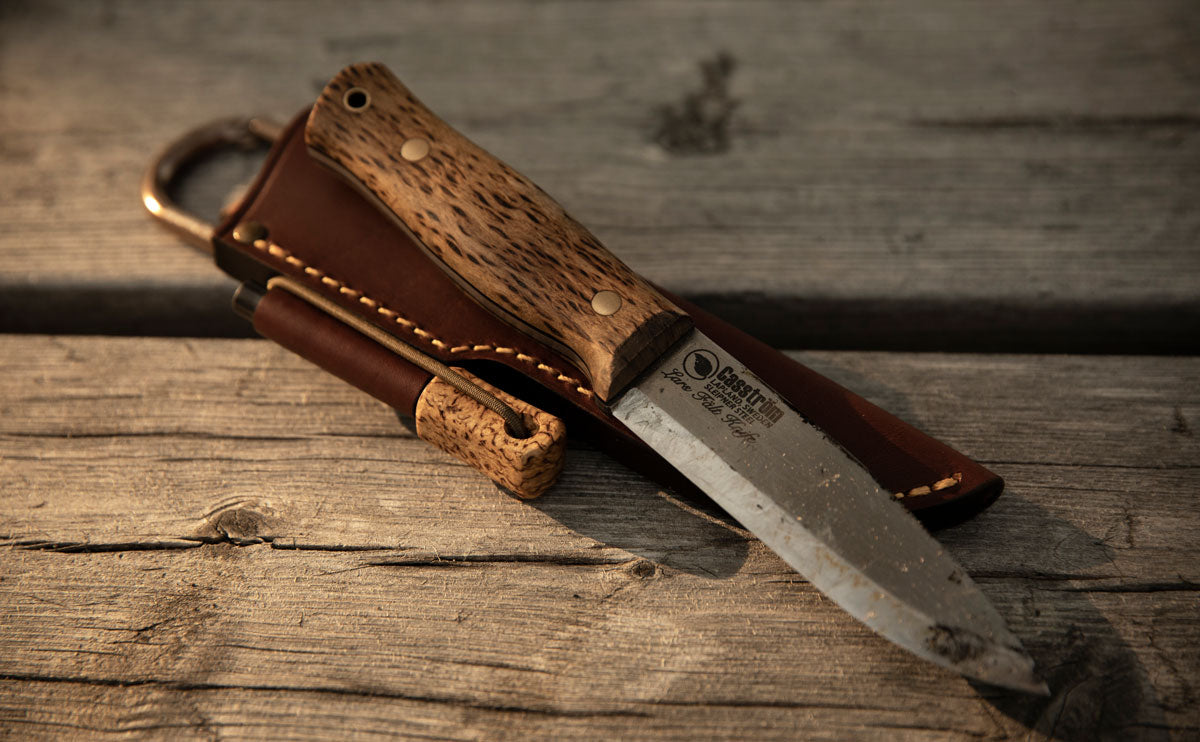
If you own a carbon steel knife and use it regularly, you'll notice that the steel doesn't look exactly the same as when the knife was shiny and brand new.
That bright steel surface might start to develop a soft grey tone. Perhaps darker patches will appear on the blade, or hints of blue or brown. The change often begins subtly, but over time the blade develops a character all its own.
This is what we call patina.
 What is patina?
Patina is a thin layer of oxide that forms on the surface of carbon steel when the steel reacts with its environment.
Carbon steel is more reactive than stainless steel. When the steel comes into contact with oxygen, moisture, and the natural acids found in food, the surface gradually changes. Instead of remaining shiny and polished, a layer of oxides forms, affecting both the color and appearance of the blade.
Depending on how the knife is used and cared for, the patina can vary from light grey and golden tones to blue, purple, brown, and dark charcoal grey or black.
Each knife develops its patina in its own way.
Patina is a natural part of owning and using a carbon steel knife. It's nothing to be afraid of or scrub away. For many who appreciate carbon steel, it's quite the opposite – it's part of the charm to watch the patina develop over time.
Can you accelerate the patination process?
Absolutely.
While patina forms naturally with regular use, some choose to accelerate the process. This is often referred to as forcing a patina.
There are several ways to do this. Common ingredients like mustard, vinegar, lemon juice, or coffee can be used, as the acid helps to speed up the oxidation on the exposed steel.
The method you choose can also influence the appearance of the patina. For example, applying an acidic substance in a pattern can create a deliberately mottled surface, while an even application might result in a more uniform patina.
For some knife owners, it's simply a practical way to get the blade through its initial, more reactive phase. For others, it's a creative process.
 Does patina protect the knife?
This is where it gets a bit more complicated.
A stable patina can offer some protection by creating a layer between the steel and its environment. Once a patina has formed, the steel may become less reactive under normal use than freshly polished carbon steel.
However, patina is not a protective coating in the same way as paint, plating, or a specific anti-corrosion treatment.
This doesn't mean you can leave a carbon steel knife wet or neglect its care.
Good maintenance is still essential.
Think of patina as part of the steel's natural evolution – not as a substitute for taking care of the knife.
Patina or rust?
This is perhaps the most important distinction to understand.
Both patina and rust are forms of oxidation, but they are not the same thing.
A healthy and stable patina is typically thin and adheres firmly to the steel's surface. It can be grey, blue, brown, purple, or black, and usually has a relatively smooth surface.
Rust, on the other hand, is active corrosion. It is typically orange or red and can be rough, powdery, flaky, or form raised areas on the steel's surface.
A simple way to think about it is:
Patina is character. Rust is corrosion.
If you see orange or red rust starting to develop, it's best to address it rather than letting it linger. Depending on how far the rust has progressed, surface rust can often be removed with careful cleaning or an appropriate rust removal method. After that, the blade should be cleaned, dried, and protected again.
The good news is that a little surface rust doesn't necessarily mean the knife is ruined. Carbon steel is designed to be maintained, and with proper care, it can provide you with many years of use.
 Should you remove the patina?
If the patina is stable and you like its appearance, there's no reason to remove it.
Some prefer the shiny look of freshly polished steel and therefore clean their blades regularly. Others actively encourage a darker patina and enjoy watching it develop.
Neither approach is wrong.
A knife with a story
Perhaps the best thing about patina is that it tells a story.
A brand new carbon steel knife is like a blank canvas. It looks exactly as it did when it left the workshop, but there's nothing yet to show where it has been.
You cook your first meal with it. You take it into the woods. You cook over a campfire. You sharpen it. You wash it. You oil it. Then you use it again.
Slowly, almost imperceptibly, the steel changes.
The color deepens. Small marks appear. The blade develops its own unique pattern.
This is what makes patina so cherished by many who appreciate carbon steel. It's not a flaw. It's a sign that the knife has been used and has joined you on your adventures.
 Embrace the change
Carbon steel demands a little more from you than stainless steel.
It asks you to wipe the blade. Not to leave the knife soaking in the sink. When storing it, it benefits from a little oil. In return, you get a blade that, over time, can develop a character all its own.
So if your new carbon steel knife starts to change color – don't panic.
Observe the change.
Let the grey tone emerge. See how different foods affect the blade. Notice the colors and patterns that appear over time.
Just remember the simple rule:
Patina is part of the journey. Rust is something you need to take care of.
With a little care, your carbon steel knife will not just remain a tool. It will become your knife – shaped by every meal, camp, hunt, expedition, and adventure it has been a part of.
And that is perhaps the true beauty of patina.